
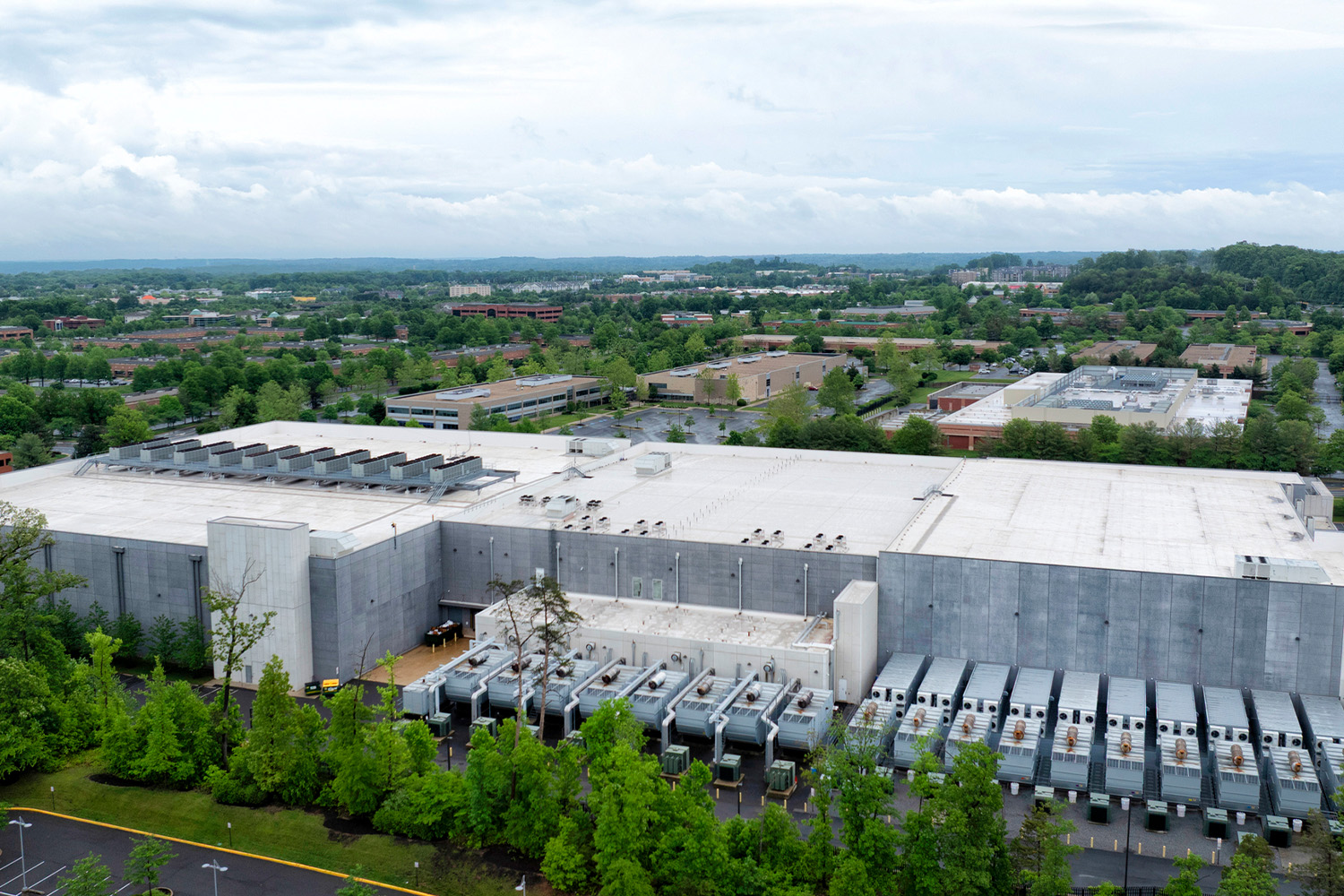
Data Center Roofing roof planning built from the roof condition.
Commercial roof scope, documentation, access planning, and weather-aware scheduling for commercial real estate & reits.
Washington, DC and its surrounding technology corridor represent the densest concentration of data center infrastructure in the world. Equinix operates more than a dozen colocation facilities in the DC metro area, and the Reston Technology Corridor in Loudoun County, Virginia, sometimes called "Data Center Alley", houses hyperscale campuses for Amazon Web Services, Microsoft Azure, Google, and virtually every major cloud provider. our company, CloudHQ, and dozens of other colocation and enterprise operators maintain facilities that together house a significant fraction of the global internet's routing infrastructure. The government's own classified and unclassified computing infrastructure, distributed across dozens of agencies and contractors throughout DC, Maryland, and Northern Virginia, adds a layer of demand that no other metropolitan market in the country approaches.
Washington's humid subtropical climate at the boundary with the Mid-Atlantic continental zone creates a year-round roofing challenge. Summer heat and humidity rivals the Gulf Coast, with dew points frequently exceeding 70 degrees Fahrenheit and ambient temperatures in the 90s for extended periods. Winter brings occasional significant snowstorms, the "nor'easters" that periodically deposit one to two feet of snow on the DC area, as well as the ice storm events that are particularly damaging to roofing assemblies and above-grade mechanical systems. The climate demands roofing systems that perform across a wider temperature and humidity range than almost any other single-climate region requires.
Vapor management in DC data centers is complicated by the wide seasonal variation in vapor drive direction. Summer conditions drive moisture vapor from the hot, humid exterior toward the air-conditioned interior; winter conditions reverse the drive, pushing interior moisture toward the cold exterior. A roofing assembly that manages vapor correctly in one season may create condensation conditions in the other if the vapor retarder position is not carefully calculated for the specific building's interior humidity profile. Data centers that maintain unusually low interior humidity for hardware protection purposes, below 40 percent RH, create stronger winter vapor drives than standard commercial buildings and require more robust vapor retarder performance.
The Reston Technology Corridor's hyperscale campuses represent a roofing market segment that is defined by continuous construction, expansion, and re-roofing activity. New data hall buildings are being added to existing campuses faster than in any other market, and the roofing systems on these new buildings must integrate with existing buildings' drainage patterns, structural systems, and maintenance access infrastructure. The management complexity of active hyperscale campus expansion work, coordinating roofing installation around crane operations, construction staging areas, and occupied adjacent data halls, requires roofing contractors with project management sophistication that goes well beyond technical installation capability.
Energy performance has become a primary roofing specification criterion in the DC market, driven by Virginia and Maryland energy codes, federal LEED requirements for government-occupied buildings, and the sustainability commitments of the major cloud providers that dominate the Reston corridor. Cool roof systems with ENERGY STAR certification are standard on new construction, and re-roofing projects on older buildings increasingly include insulation upgrades that bring the thermal assembly to current code minimums or beyond. Some hyperscale operators have adopted internal sustainability standards that require insulation R-values significantly above code minimums, recognizing that superior envelope performance reduces the mechanical cooling load that represents a significant fraction of data center operating cost.
Security considerations unique to the DC market affect how roofing work is permitted, scheduled, and supervised at many facilities. Government-leased buildings and facilities supporting classified computing operations require background checks for all roofing personnel, and work scheduling must accommodate security protocols that can add weeks to the pre-construction planning timeline. Rooftop access is controlled independently of the building's general security perimeter at many facilities, and contractors who have not previously worked in this market are often surprised by the level of access control and supervision that is standard practice.
Drainage design on DC data center roofs must account for the region's capacity for intense rainfall during summer convective storms and the simultaneous challenge of managing snow and ice melt from winter events. The Washington area receives approximately 40 inches of rain annually, with intense thunderstorm events capable of delivering two or more inches per hour during peak summer storm activity. Internal drain sizing that is adequate for typical commercial buildings in the area may be undersized for data center buildings where rooftop cooling equipment creates islands of ponding around poorly drained equipment pads.
The economic scale of DC-area data center roofing projects is unlike anything in most other markets. A single hyperscale campus re-roofing in Loudoun County may involve 500,000 or more square feet of roofing area across multiple buildings, requiring multi-year contract structures, large contractor workforces, and sophisticated project management systems. Even enterprise-scale single-building data centers in the DC metro routinely involve roofing scopes of 50,000 to 200,000 square feet that require production management approaches more common to industrial construction than standard commercial roofing. Contractors who enter this market must be capitalized and organized to execute at this scale.
Frequently Asked Questions: Data Center Roofing in Washington, DC
What makes the DC-area data center roofing market unique compared to other markets?
Scale, density, and operational criticality distinguish the DC market. The Reston Technology Corridor alone contains more data center square footage than most entire states, and the facilities housed there support infrastructure used by virtually every major cloud provider and government agency in the country. Roofing contractors operating in this market must match that scale with equivalent project management sophistication, documentation practices, and quality control systems.
What Tier ratings require the most rigorous roofing specifications?
Tier III and Tier IV data centers require roofing specifications that address redundant drainage systems, enhanced wind uplift resistance, and documented installation QC that supports the facility's overall N+1 or 2N redundancy architecture. A single-point failure in the roofing system, an uninspected seam deficiency or an undrained low point, is inconsistent with the Tier III/IV design philosophy that the building owner has invested heavily to achieve.
How do federal security requirements affect roofing contractor qualification in DC?
Government-occupied buildings and defense contractor facilities in the DC area typically require background checks, security clearances for certain personnel, and adherence to access control protocols that can significantly extend pre-construction planning timelines. Contractors pursuing work on these facilities should begin the personnel qualification process months before the anticipated project start and should maintain qualified rosters of screened employees.
What insulation R-values are typical for new DC-area data centers?
DC-area energy code requires minimum R-25 for low-slope commercial roofs in Climate Zone 4. Many data center operators specify R-30 to R-40 to reduce mechanical cooling loads and improve the thermal assembly's vapor management performance. The incremental insulation cost is typically recovered within five to seven years through reduced HVAC energy consumption at facilities operating 24 hours a day.
How should DC data center owners plan for re-roofing active hyperscale campuses?
Multi-building campuses require phased re-roofing plans that sequence work to avoid disrupting active data halls, maintain crane and equipment access for ongoing construction, and complete each phase during the most favorable seasonal window. Multi-year master service agreements with a qualified roofing contractor provide the scheduling flexibility and contractor familiarity with campus-specific conditions that individual project bidding processes cannot achieve.
- Food Processing Cold Storage
- Aerospace Defense Roofing
- General Contractors
- Federal Facility Operators
- Retail Chain Operators
- Drone Roof Inspection
- Commercial Roof Inspection
- Manufacturing Facility Roofing