
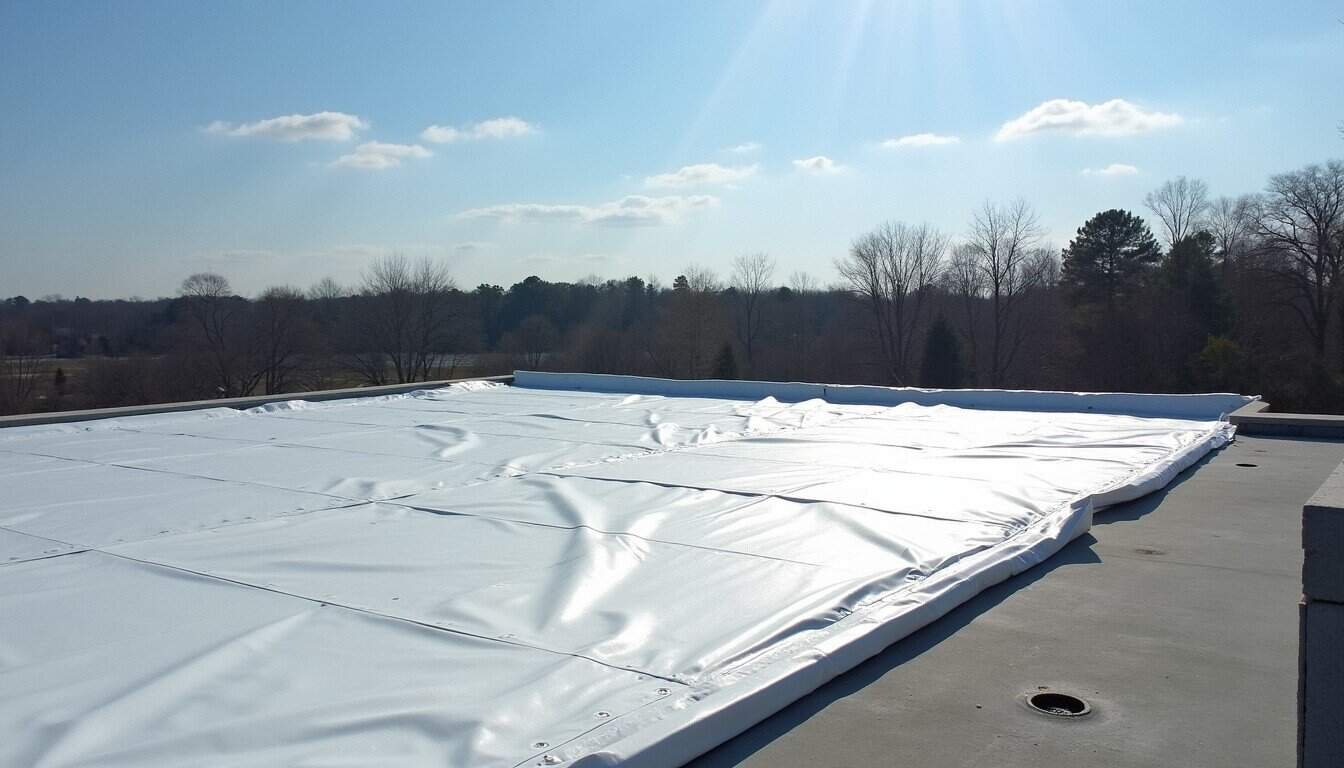
Storm Damage Roof Repair roof planning built from the roof condition.
Commercial roof scope, documentation, access planning, and weather-aware scheduling for storm damage roof repair.
Washington DC's commercial market spans the NoMa and Anacostia redevelopment zones, the Dulles Technology Corridor, the I-270 biotech belt, the I-66 suburban employment ring, and the Tysons Corner and Rosslyn-Ballston corridor. Storm damage documentation and insurance claim roofing in this market requires a contractor who can produce GPS-tagged hail impact maps, wind damage assessments, and supplemental claim documentation in the format that commercial property adjusters use: not just a repair estimate, but the evidence package that documents the claim at full scope.
Storm Damage Roof Repair moves on a different clock from planned capital work. We focus first on stabilizing the building, recording what changed, and keeping temporary protection from becoming an undocumented permanent repair.
Our Storm Damage Roof Repair notes separate active leaks, old repairs, drain restrictions, wet-insulation concerns, roof-edge movement, and penetrations that need new flashing. That separation keeps dry-in actions, photo records, and a contractor-side repair scope from turning into a vague allowance.
Washington weather changes the Storm Damage Roof Repair priority list quickly because DC Department of Buildings publishes the 2017 District of Columbia Construction Codes, which include the 2015 ICC model-code family and local Title 12 DCMR amendments. We check expansion and contraction, brittle flashings, ponding at drains, displaced coping, membrane punctures, and details that only leak under wind-driven rain.
Drainage for Storm Damage Roof Repair gets traced from high points to discharge points. We look at primary drains, overflow scuppers, strainers, conductor heads, ponding marks, tapered insulation, and roof edges that decide whether water leaves the building or works beneath the assembly.
Older-building Storm Damage Roof Repair work needs a slower investigation because WDCEP lists NoMa-Gallaudet U and Union Station as the Metrorail stations serving the NoMa neighborhood profile. Masonry parapets, concrete decks, abandoned curbs, recover layers, and changed rooftop equipment can hide the reason a roof has failed more than once.
Emergency Storm Damage Roof Repair work and planned Storm Damage Roof Repair work receive different scopes. A dry-in after heavy rain may require temporary protection and immediate leak control, while capital work needs core cuts, moisture checks, attachment decisions, sheet-metal details, and phasing that ownership can approve.
When Storm Damage Roof Repair involves claim documentation, we stay in the contractor lane. We photograph roof conditions, identify visible damage, write repair or replacement scope, protect the building, and answer technical questions without promising coverage decisions or settlement values.
DowntownDC BID describes its district as running from the Convention Center at Mount Vernon Square to Constitution Avenue, and from Louisiana Avenue to 16th Street is one reason Storm Damage Roof Repair pricing starts with interior use. Federal offices, medical space, universities, retail tenants, hotels, restaurants, and nonprofit facilities all change sequencing, odor control, daily closeout, and protection below the deck.
Budget clarity on Storm Damage Roof Repair comes from showing the decision tree. We define what can be repaired, what must be tested before restoration, what assumptions control a recover, and what evidence points to replacement instead of another patch cycle.
Sheet metal connected to Storm Damage Roof Repair is part of the roof system, not trim. Coping joints, gutter capacity, counterflashing, wall panels, fascia, scuppers, and edge securement influence whether the roof handles a thunderstorm, a freeze-thaw cycle, or service traffic.
Occupied-building coordination for Storm Damage Roof Repair is written before production begins. We identify noise, odor, hot work, ladder paths, roof access, pedestrian barricades, interior protection, and daily closeout requirements because Washington buildings rarely give roofers an empty site.
Procurement teams comparing Storm Damage Roof Repair need enough detail to compare bids fairly. We spell out tear-off areas, recover assumptions, insulation thickness, cover board, membrane attachment, coating limits, drain work, metal profiles, temporary protection, warranty assumptions, exclusions, and alternates.
Maintenance planning for Storm Damage Roof Repair keeps small defects from becoming capital surprises. We check service walk paths, clogged drains, sealant splits, membrane wear near equipment, skylight curbs, pitch pockets, and rooftop debris that can hold water against seams or walls.
Code and warranty language for Storm Damage Roof Repair are handled after the roof facts are known. DC Construction Codes, wind exposure, fire classification, insulation value, fastening pattern, and manufacturer detail requirements can all change the final assembly.
Scheduling for Storm Damage Roof Repair also needs a weather plan. We look at forecast windows, temporary tie-ins, daily dry-in expectations, material storage, rooftop traffic, and the point where production should stop rather than gamble with an open roof.
For Storm Damage Roof Repair, the final recommendation has to be defensible in the field and in the budget file. We would rather identify a limited storm damage roof repair clearly than dress it up as a complete solution, and we would rather recommend Storm Damage Roof Repair replacement when the roof history, moisture evidence, and edge conditions show that patching has stopped making sense.
When the Storm Damage Roof Repair roof decision needs to move beyond a guess, we inspect the roof, document the risk, and give the owner a repair, restoration, recover, or replacement path that matches the building.
Questions We Answer Before Work Starts
What is the realistic cost difference between repairing and replacing storm damage roof repair?
For storm damage roof repair, the spread depends on access, wet insulation, deck condition, sheet metal, drainage, security requirements, and whether work has to happen after hours. We inspect first, then separate immediate leak control from capital work so the owner can compare choices cleanly.
Can storm damage roof repair be handled while the building stays open?
Most storm damage roof repair work can be phased around an occupied building, but the plan has to be honest about noise, odor, loading, safety, and daily dry-in. We discuss tenant hours, freight access, interior protection, and weather stops before production begins.
How do DC storm and winter conditions change the storm damage roof repair scope?
Heavy rain, humid summers, occasional hail, wind-driven rain, snow, ice, and freeze-thaw movement put extra stress on drains, scuppers, coping, flashings, and seams connected to storm damage roof repair. We look for details that fail only under wind or thaw cycles, not just the obvious stain.
What documentation do we receive after a storm damage roof repair inspection?
A storm damage roof repair inspection normally includes roof photos, observed deficiencies, drainage notes, visible moisture concerns, repair priorities, and budget direction. Larger scopes can be broken into immediate repairs, restoration candidates, recover assumptions, and replacement areas.
When is replacement better than another round of storm damage roof repair repairs?
Replacement becomes the stronger storm damage roof repair option when repairs are chasing widespread wet insulation, failing seams, displaced edge metal, brittle flashings, poor drainage, or deck concerns. If repair is still rational, we say so and define the limits.