
Airport Terminal & Aviation Facility Roofing roof planning built from the roof condition.
Roofing for terminals, hangars, and aviation support buildings in the DC region, where the roofs are vast and low-slope, the wind and jet blast are relentless, and operations never stop.
A building that can never close for a roof
Aviation roofing breaks the normal commercial timeline before the first roll of membrane arrives. An airport runs around the clock, and every access point, every material lift, and every crew movement has to be cleared through the airport's facilities department, the FAA Part 139 safety program, and in places TSA security. Ronald Reagan Washington National Airport sits just across the Potomac in Arlington and is one of the most operationally and politically sensitive airports in the country, with American, Delta, and Southwest running mainline service through it. You build the coordination into the scope before the contract is signed, or you do not get on the roof at all.
The DC region carries an unusually heavy aviation load. Reagan National handles dense passenger volume on a constrained site. Washington Dulles International, out in Loudoun County and now connected by the Metro Silver Line, is United's international hub. Baltimore/Washington International Thurgood Marshall, about thirty miles northeast, is the base for Southwest's operation. Around all three sit cargo buildings, rental-car centers, FBO hangars, maintenance facilities, and airport hotels, and every one of them inherits the access and security constraints of the campus it sits on.
The roofs are large, flat, and unforgiving
Terminal roofs are immense low-slope expanses with very little pitch, which puts drainage design at the center of every project and leaves almost no tolerance for ponding. A flat field that holds water is a flat field that fails early. Most terminal reroofing in the region uses a TPO or PVC single-ply membrane over a tapered insulation system designed to move water off the roof and break up the low spots that decades of settlement create. The sheer scale of these roofs also means a small detailing error gets repeated across acres, so the details have to be right before they are multiplied.
Wind and jet blast change the specification
Airside roofs live in a wind environment that a typical commercial building never sees. Jet blast from aircraft and the open, exposed siting of terminal and apron structures drive uplift forces well beyond what you would specify for a comparable logistics box. Membrane adhesion, fastening, and ballast all get specified up from the standard, and seam geometry on high-bay structures has to account for the loads those large surfaces catch. Terminal HVAC is also denser and heavier than ordinary commercial, which means more curbed penetrations and more flashing to detail and maintain, each one engineered individually rather than run from a stock pattern.
Badging is not a favor, it is the baseline
Crews do not set foot on any part of an airport campus without confirmed authorization, and airside work requires a higher level of pre-planning and credentialing than landside. We factor badging and security access into the bid timeline from the start, because discovering it onsite is how a project stalls. Material deliveries, crane lifts, and any work near airside areas are scheduled into approved windows and coordinated with the FAA NOTAM process where required. This is standard project setup for us, not an exception we scramble to meet.
Hangars and aviation support buildings
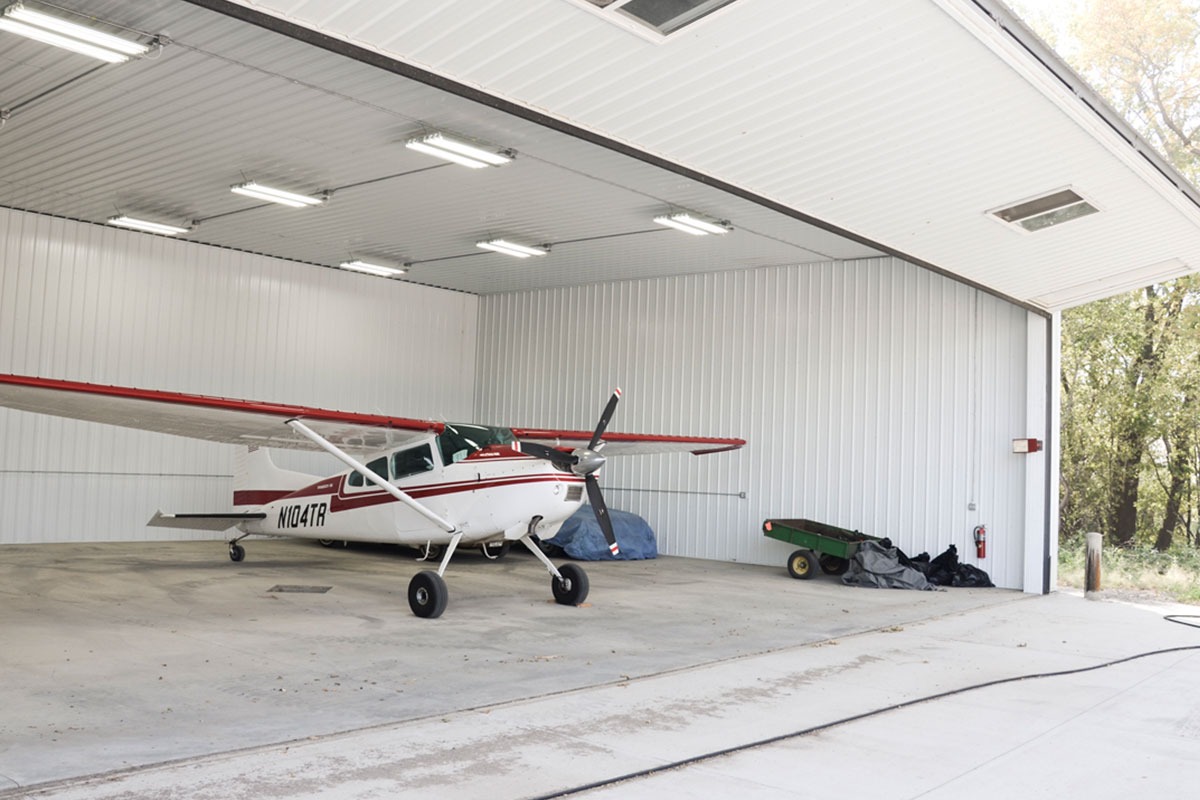
The support side of an airport is its own work. FBO hangars and general-aviation buildings are high-bay structures with wide clear-span roofs, often pre-engineered metal, and they need fastening patterns and seam details built for the uplift and thermal movement those big surfaces generate. Cargo facilities, maintenance buildings, rental-car centers, and on-campus hotels each carry their own roof profile, but the airport coordination requirement follows them all. For hangars and reliever-airport structures, standing-seam metal is frequently the right call, and we specify and install those systems across the region.
What we set up before an aviation roof
- A coordination plan with airport facilities and the FAA Part 139 program built into the scope before mobilization.
- Tapered insulation under single-ply on terminal fields to drive drainage and bring ponding tolerance toward zero.
- Uplift-rated adhesion, fastening, and ballast tuned to jet-blast and exposed-site wind loads on airside roofs.
- Confirmed badging and airside credentialing for every crew member before anyone reaches the roof.
Airport & Aviation Roofing Questions
We develop a phased plan with the airport facilities department and the FAA Part 139 coordinator and get it approved by airport operations. Deliveries, crane lifts, and any work near airside areas run in approved windows and are coordinated with the FAA NOTAM process where required. This is a standard part of our project setup.
Most terminal reroofing uses a TPO or PVC single-ply membrane over a tapered insulation system that improves drainage and addresses ponding on a nearly flat field. For new high-bay aviation structures and hangars, standing-seam metal is often specified. The choice depends on the existing deck, load capacity, and operational limits, set after a walk with the facilities engineer.
Terminal HVAC is much denser than standard commercial. Our pre-project survey documents every penetration, curb height, and mechanical clearance before the work plan is built, and oversized curbs and complex through-penetrations are flashed with individually engineered details rather than stock patterns.
Yes, with appropriate badging and in full coordination with airfield operations. Airside work requires a higher level of pre-planning and crew credentialing, which we build into the bid timeline. We do not mobilize anyone without confirmed airside authorization.
Yes. General-aviation hangar roofing, from a single-bay private hangar to a multi-unit FBO complex, is a regular part of our work in the region. High-bay hangars with wide-flange steel or pre-engineered systems need contractors who understand their uplift and thermal-movement behavior, and we specify and install for those structures.
- Medical Office Building Roofing
- Restaurant Standalone Roofing
- Fitness Center Gym Roofing
- Funeral Home Roofing
- Fire Station Roofing
- Hotel Roofing
- Built Up Roofing
- Skylight Penetration Flashing