
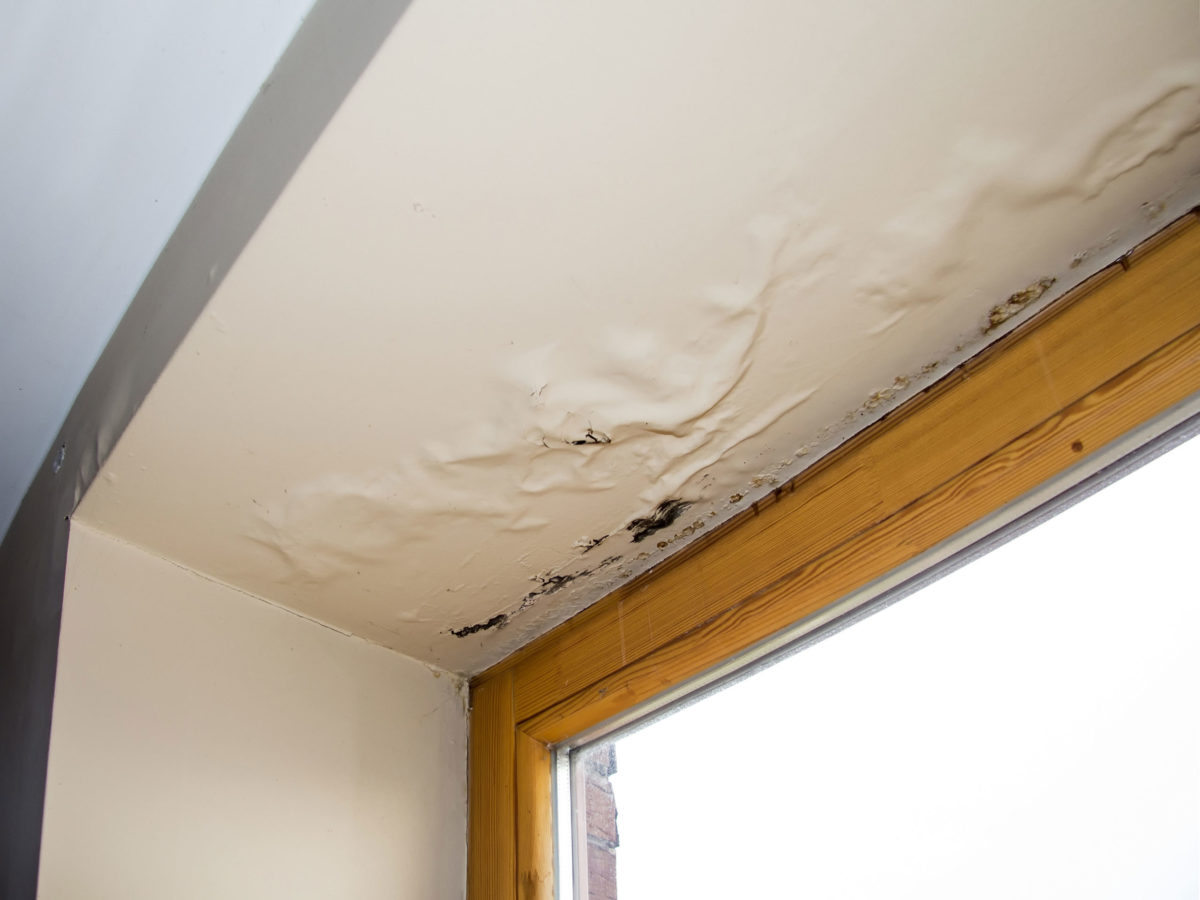
Humidity & Moisture Damage Roof Repair roof planning built from the roof condition.
The Damage That Comes From Inside the Building
Most roof trouble works from the outside in. Humidity damage works the other way. The water never crosses the membrane at all; it starts as warm, moist air inside the building, drifts up to the cold underside of the roof, condenses there, and saturates the insulation from below while the surface overhead stays dry and convincing. We open up roofs across Washington, DC that have been quietly rotting this way for years, and the owners are usually stunned because they had been looking for a leak that was never there.
This is a Mid-Atlantic problem as much as a building problem. DC sits in a humid subtropical band where the dew point parks in the seventies for weeks at a stretch each summer, and the buildings hit hardest are the ones manufacturing moisture indoors. The convention-district hotels with their pools, kitchens, and laundries; the lab and hospital buildings; the packed multifamily towers in NoMa; the older downtown offices whose HVAC has been wrestling humidity since before anyone thought about vapor control. In all of them the indoor air is constantly pushing upward against the roof, and when the assembly cannot manage that push, the moisture has nowhere to go but into the insulation.
How a Roof Fails From the Underside
The damage pattern looks nothing like wear or storm injury, and once you know it you can read it underfoot. As the insulation takes on water, trapped vapor beneath the sheet expands in the heat and lifts it into blisters. The board swells and the joints heave up into long ridges you can feel and catch a toe on. Wet insulation loses nearly all of its R-value, so the building hemorrhages conditioned air through the roof and the HVAC runs longer and bills higher to make up the loss. On a steel deck the standing moisture corrodes the metal from above until the deck itself is in question. And every visible symptom understates the problem, because the saturation spread under sound-looking membrane long before the first blister or soft spot ever surfaced.
The Vapor Retarder Is Almost Always the Culprit
Drying the roof out is the easy half. The real fix is correcting why the moisture got trapped, and in DC's climate that usually traces back to the vapor retarder. For most of the year here the vapor drive runs upward, from the warm conditioned interior toward the outside, which means the retarder belongs low in the assembly near the deck, where it intercepts moisture before it ever reaches the cold zone under the membrane. Roofs built with that layer in the wrong place, or with no vapor control at all above a high-humidity interior, become condensation traps that fight the building's physics instead of working with it. Recover a roof like that without addressing the vapor layer and all you have done is build a fresh trap, so part of every diagnosis we write is figuring out what the vapor management should be and folding the correction into the repair scope.
You cannot repair what you have not located. We find saturated insulation with an infrared survey run after sundown, when the wet areas still hold the day's heat and read warmer than the dry board surrounding them. Then we confirm those thermal flags with core cuts that show the real insulation condition, the state of the deck beneath, and whether a vapor retarder exists and where it actually sits. On any building that has gone a few years without a documented moisture survey, we push hard for one before any major roofing decision, because catching wet insulation at fifteen percent coverage versus fifty percent is the entire difference between a contained repair and a teardown.
When to Patch and When to Replace
Where the wet insulation sits in discrete pockets with sound dry board around them, we cut and patch: pull the saturated material down to the deck, dry or replace the deck where corrosion has begun, set new dry board, correct the vapor control through the repaired area, and rebuild the membrane along with any affected edge metal and flashing. Where the survey shows water across more than roughly a quarter to a third of the roof, or where deck corrosion has turned structural, a spot repair is just money poured into a roof that is already going, and the honest answer is a full replacement designed with the right vapor barrier from the start. We say which one it is and we show our work, so you get the moisture map, the core findings, and a side-by-side of repair against replacement before you commit a dollar.
- Blistered single-ply membrane lifted by vapor pressure rising from below
- Ridged, swollen insulation board that has lost both its slope-to-drain and its R-value
- Saturated insulation mapped by infrared survey and verified with core cuts
- A missing or mislocated vapor retarder trapping interior moisture in the assembly
- Corroded steel deck where wet insulation has sat through multiple seasons
- Lifted edge metal and coping where trapped moisture has rusted out the fasteners
Common Questions About Humidity Damage Roof Repair in Washington, DC
How do you find moisture you can't see from the surface?
We run an infrared thermal survey, normally after sundown when the contrast is sharpest. Wet insulation holds the day's heat longer than the dry board around it, so it shows up as a distinct warm patch on the scan. We then take core cuts at the flagged spots to confirm the insulation condition, check the deck underneath, and see whether a vapor retarder is present and where it sits.
What traps moisture inside a roof when there's no leak?
In Washington's climate, warm humid indoor air drives upward through the roof for most of the year. If the vapor retarder is set too high in the assembly instead of down near the deck, or is missing entirely, that vapor condenses against the cold underside of the membrane and soaks the insulation. Over time it destroys the R-value, corrodes a steel deck, and blisters the sheet, all without a drop of rain ever getting in.
Can a humidity-damaged roof be repaired rather than replaced?
If the wet insulation is confined to pockets with dry board around them, yes. We cut out the saturated material, repair the deck, set new board, correct the vapor control, and rebuild the membrane and flashing. Once wet insulation covers more than about a quarter to a third of the roof, or deck corrosion has gone structural, a full replacement with a properly designed vapor barrier is the better value. We hand you the survey results and a repair-versus-replace comparison first.
How quickly does this kind of damage spread?
Steadily, once it takes hold. Wet insulation gives back no thermal resistance, so the building keeps losing conditioned air and the HVAC bill climbs, and on a steel deck the corrosion only accelerates under constant moisture. A roof at fifteen percent wet coverage left another couple of seasons can easily reach forty or fifty, which is how a manageable repair turns into a full replacement.
Why fix the vapor barrier if we're just recovering the roof?
Because the vapor barrier is the actual cause. Recover over an assembly that trapped moisture without correcting the vapor control and you have built a brand-new trap, so the problem returns inside the new roof. Diagnosing and fixing the vapor layer is simply part of doing the repair right.