
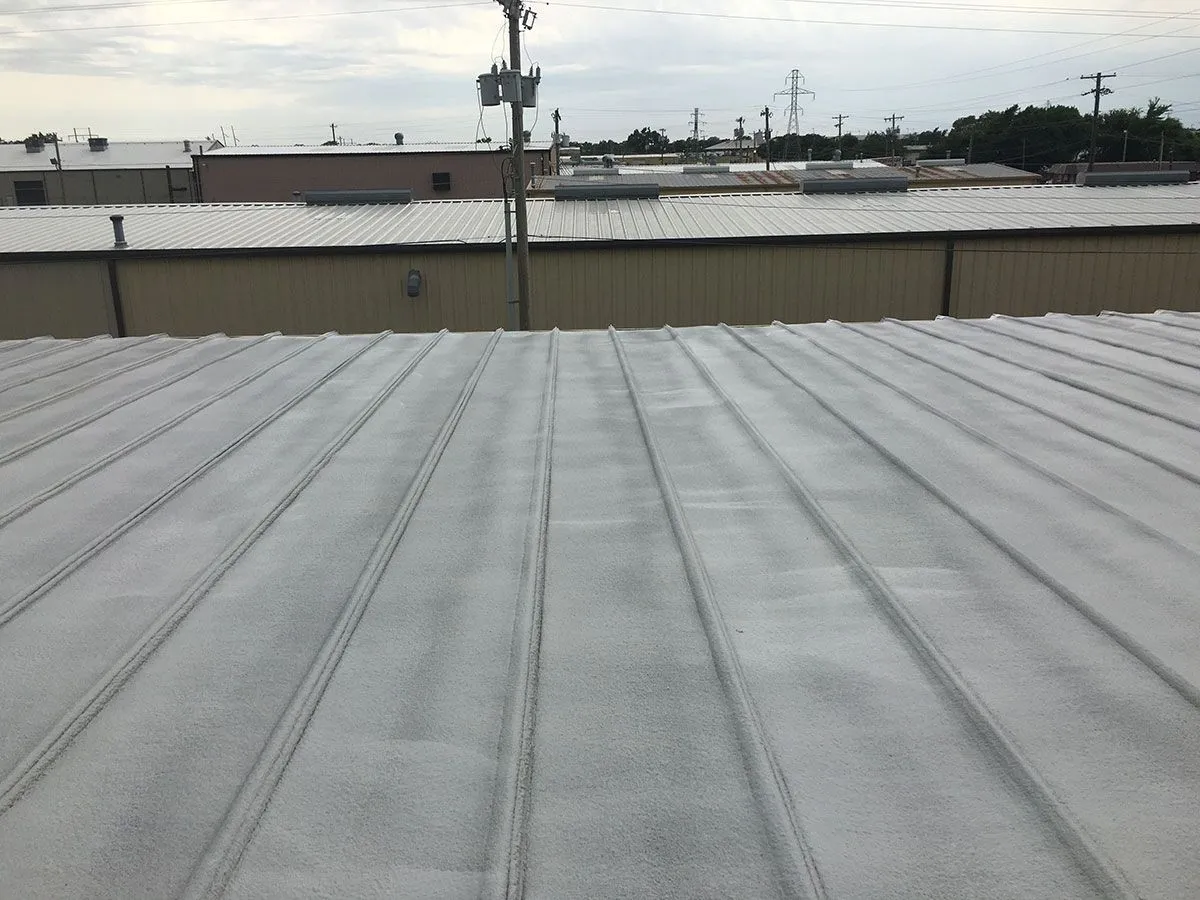
A service agreement that maintains the roof and writes the record that wins claims.
Commercial roof insurance claims in Washington rarely fail because the storm was not real. They fail because the carrier writes the damage off to wear and tear: and the owner has nothing dated to answer with. A roof service agreement fixes the roofing problem and the paperwork problem at the same time: the roof gets serviced on a fixed schedule, and every visit adds a photographed, timestamped entry to a condition file that exists long before anyone needs it.
Two Visits a Year, Each One on the Record
The agreement schedules two rooftop service visits a year. The spring visit documents what the cold months did and corrects it: resealing flashings, closing small membrane splits, reseating lifted terminations. The fall visit clears every drain and scupper, tightens the details ahead of the rough season, and confirms the roof is watertight while that statement can still be proven with photographs. Within two business days of each visit you receive the report: images keyed to roof areas, the minor repairs completed on the spot, and anything worth scheduling, priced. Read one report and you know the roof. Keep six of them and you hold evidence.
The Pre-Snow Visit Matters Most Here
District winters are swing winters: a nor'easter drops a foot of heavy wet snow, then a week of freeze-thaw grinds at every seam while meltwater looks for a way inside. Every roof under agreement gets a pre-snow visit ahead of winter: drains and scuppers cleared so melt has somewhere to go instead of damming at the edge metal, membrane and flashings checked before snow load and ice start working on them. In claims terms this visit is gold. Ice-dam and snow-load losses routinely turn on whether drainage was maintained, and the pre-snow record answers that question before an adjuster thinks to ask it.
When Damage Happens, the File Goes to Work
After a derecho, a hail run, or a February storm crosses the city, we photograph the damage fresh and set it beside the most recent report: the same corners, the same seams, before and after. That comparison is what separates storm damage from deterioration in an adjuster's write-up. We will meet the adjuster on the roof and walk it with them. The carrier always decides coverage; what the agreement changes is that you argue from records instead of memory.
The building stock makes this discipline worth more in Washington than in most markets. Low-slope roofs downtown and across NoMa sit shoulder to shoulder, share parapets, and drain through interior systems where a single clogged strainer can back water up two floors deep. When a carrier's engineer asks how long water stood on the membrane, the answer should come out of a file, not a guess. The same file settles the quieter disputes too: with a tenant over who caused the ceiling stain, with a buyer over roof condition at sale, with a lender at refinance.
Open the File Before You Need It
Pricing takes one walk. We assess the roof, note condition and access, and send a flat annual figure that covers the two scheduled visits, the pre-snow check, cleared drains, the minor repairs made during each visit, and every report in the file. Call 202-410-0335 or use the contact page, and the first entry in your roof's file can be dated this month.