
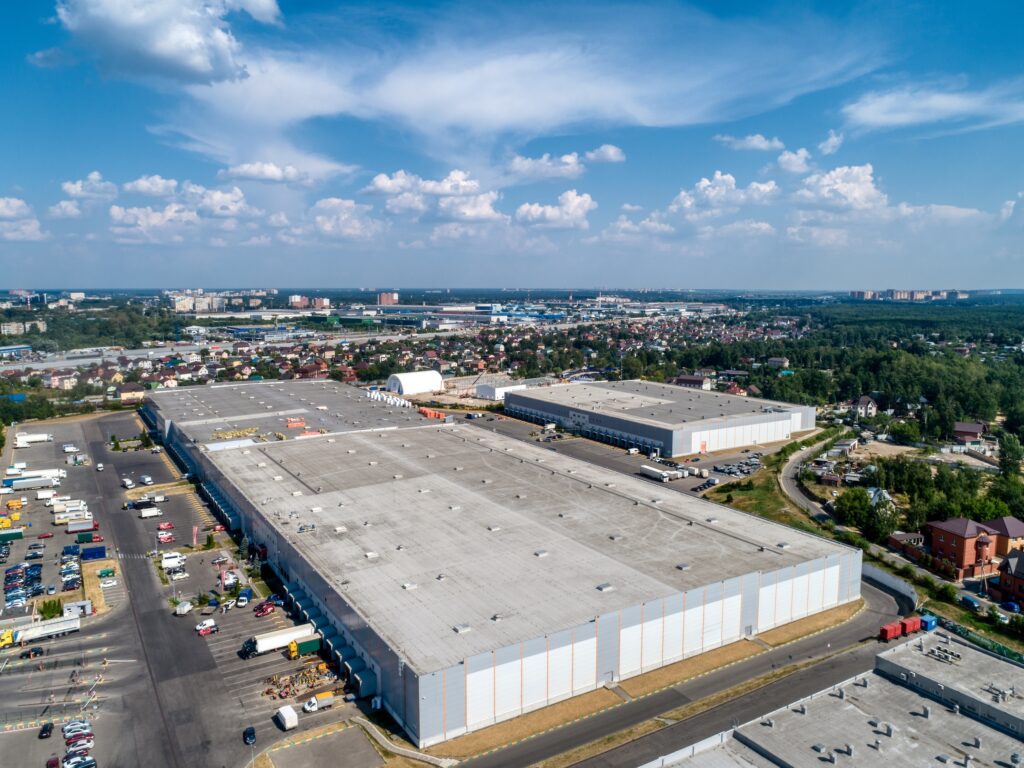
Warehouse and Distribution Center Roofing roof planning built from the roof condition.
Commercial roof scope, documentation, access planning, and weather-aware scheduling for acrylic roof coatings.
Amazon's massive fulfillment and sortation center infrastructure ringing the Washington DC metro, including large facilities in Prince George's County and the Route 1 corridor in Northern Virginia, sets the operational and regulatory standard against which all DC-area warehouse roofing is measured. The District itself contains significant federal government distribution and logistics facilities along the Anacostia waterfront and in the Southeast quadrant, where historic buildings and modern logistics centers sit side by side under the jurisdiction of the DC Department of Buildings and its distinctive permitting and inspection culture.
DC's climate sits in ASHRAE Zone 4A, experiencing genuine winter cold with regular freeze events and snowstorms, hot and humid summers, and a spring and fall shoulder season that produces some of the region's most intense rainfall. A warehouse roof in the District must perform across a 100-degree Fahrenheit temperature range over the course of a year, from January lows below 20°F to July roof surface temperatures above 150°F on dark membrane systems. The wide thermal swing creates significant expansion and contraction stress on membrane seams, penetration flashings, and perimeter terminations that requires high-quality materials and meticulous installation practice.
Many DC-area warehouses occupy older industrial buildings in Buzzard Point, Ivy City, and the Anacostia waterfront area, where original roofing systems may date to the 1960s or 1970s and have been recovered multiple times without full tear-off. A thorough infrared moisture scan before any re-roofing project in these older buildings is essential to identify wet insulation that must be removed before a new system is installed over it. Installing a new single-ply membrane over saturated legacy insulation traps moisture that will continue to degrade the structural deck and eventually require far more expensive remediation work than a clean tear-off would have required initially.
Federal government facilities within the District have additional regulatory layers beyond the standard DC Department of Buildings process. Warehouse and distribution facilities operated by or under contract to federal agencies may require GSA review, historic preservation consultation under Section 106 if within a designated historic district, and compliance with Executive Order 14057 requiring federal facilities to reduce embodied carbon and improve energy efficiency. Roofing contractors working on federally occupied or contracted facilities must hold appropriate contractor qualifications and understand the additional documentation requirements that federal projects impose.
Drainage for DC warehouse roofs must comply with the District's aggressive stormwater management regulations, which are among the most stringent in the nation due to the city's obligations under its MS4 stormwater permit with the EPA. Large warehouse buildings may be required to implement green roofing elements, cisterns, or other retention features to reduce impervious surface runoff. The District's RiverSmart Commercial program provides technical assistance and may offer financial incentives for warehouse owners willing to incorporate stormwater retention features into a re-roofing project, transforming a compliance cost into a potential financial benefit.
Dock canopy and penetration flashings on DC warehouse roofs are exposed to the same freeze-thaw cycling that affects all mid-Atlantic commercial roofing. The Anacostia corridor's proximity to the river means that warehouse sites in that area also experience elevated humidity year-round, accelerating the corrosion of ferrous metal components. Stainless steel and aluminum flashings with factory-applied protective coatings are the appropriate specification for waterfront warehouse locations, and the higher initial cost is easily justified by the extended service life compared to standard galvanized components in this corrosive environment.
Energy codes in DC follow the International Energy Conservation Code as adopted in the DC Construction Codes, and the District has historically been aggressive in adopting updated code editions. The current DC codes require continuous insulation R-values for commercial roofs that exceed ASHRAE 90.1 minimums in some occupancy categories, and the DC DOEE (Department of Energy and Environment) Building Energy Performance Standards program requires covered buildings to meet escalating energy use intensity benchmarks on a scheduled timeline. Warehouse re-roofing projects present an opportunity to upgrade insulation and membrane reflectivity in a way that contributes to BEPS compliance.
Snow removal from DC warehouse roofs is occasionally required after significant winter storms, and the roof system must be designed to accommodate the temporary loads imposed by accumulated snow and the equipment used to remove it. Wheeled snow removal equipment can damage single-ply membranes if operated without proper protection boards, and rooftop snow removal crews unfamiliar with commercial membrane systems can easily create more damage than the snow itself would have caused. Including a rooftop access and maintenance protocol in the building's operations manual, and briefing maintenance staff annually, reduces the risk of accidental membrane damage during winter operations.
Local DC commercial roofing contractors bring knowledge of the District's licensing requirements, the DOB permit and inspection process, and the DOEE's green building programs that a contractor licensed only in Virginia or Maryland may not fully understand. The DC contractor licensing system is distinct from both Virginia and Maryland, and performing commercial roofing work in the District without proper DC licensing exposes both the contractor and the building owner to code enforcement action. Verifying that a proposed roofing contractor holds current DC DCRA licensing is a basic due diligence step before executing any commercial roofing contract in the District.
- EPDM Commercial Roofing
- Standing Seam Metal Roofing
- Emergency Tarp Dry
- School Roofing
- Government Building Roofing
- KEE Single Ply Roofing
- Hail Damage Roof Restoration
- Multifamily Roofing