
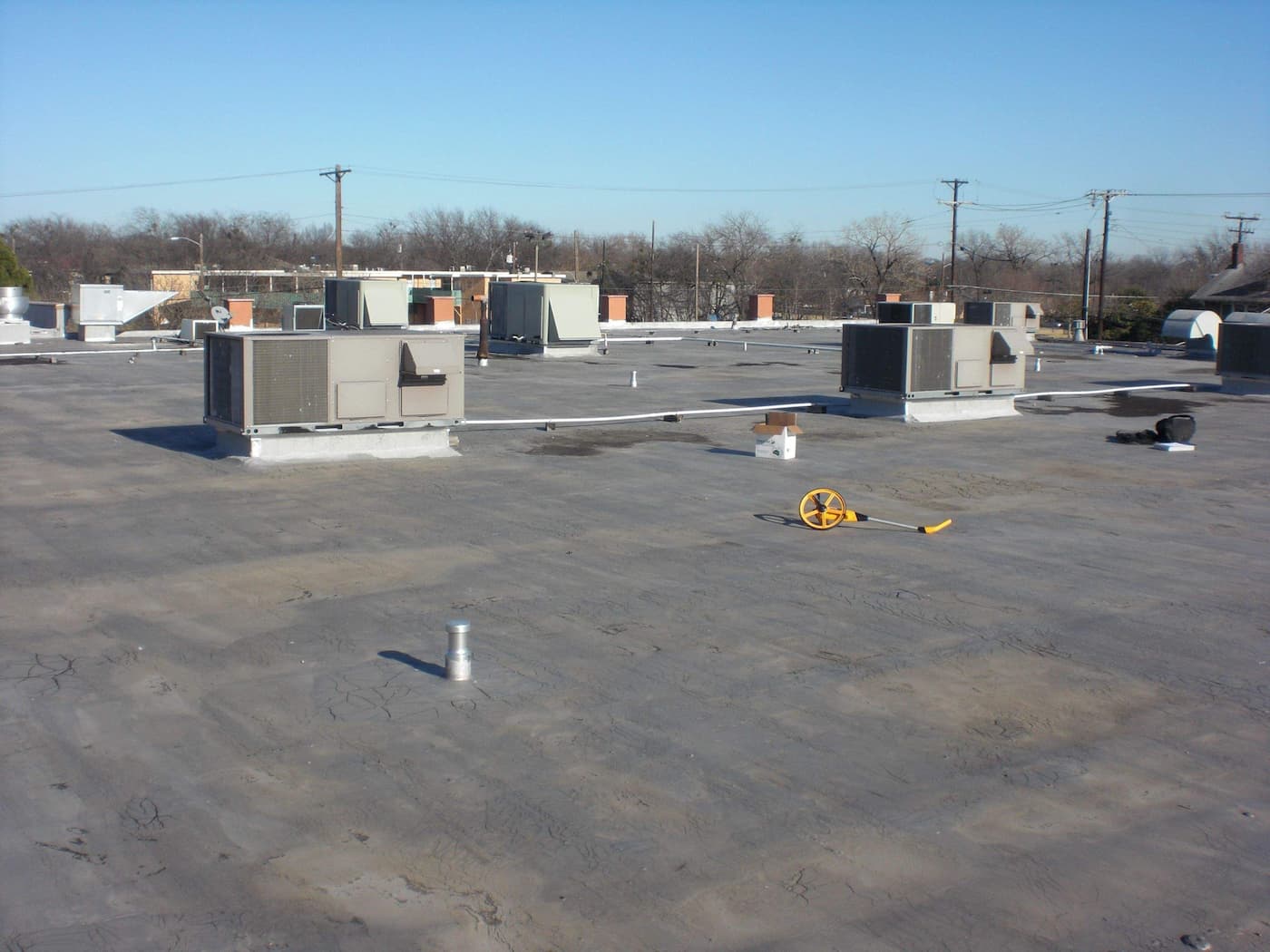
Hail impact mapping, documented for the claim file.
Grid-pattern roof inspection, impact-density mapping, and damage documentation for Washington DC commercial roofs after hail.
Hail in the DC Metro: a Secondary but Real Risk
Hail isn't the headline weather threat in Washington the way it is farther west on the Plains, but it isn't rare here either. The same spring and summer thunderstorm systems that bring damaging wind to the mid-Atlantic can also drop hail, and commercial roofs across the District, Maryland suburbs, and Northern Virginia take hits from these storms most years. The damage tends to be easy to overlook because it doesn't always puncture the membrane outright: a lot of hail damage on a low-slope commercial roof is subtle bruising and granule loss that's only obvious up close.
That subtlety is exactly why hail claims get underdocumented. A property manager or owner walking a roof after a storm may see nothing alarming from a standing-height glance, while a close inspection turns up dozens of impact points across the membrane field. Left unaddressed, those impact points are where water intrusion starts months later, long after the storm itself has been forgotten and the claim window feels closed.
What Hail Damage Looks Like on a Commercial Roof
On single-ply membranes like TPO and PVC, hail impact shows as circular bruising, sometimes with a slight depression or a fracture in the membrane surface. On modified bitumen and built-up roofs, granule loss and mat exposure at impact points are common. Metal components, coping caps, roof-mounted equipment housings, vent covers, often show hail damage more visibly than the membrane itself, with dents that are easy to photograph and count. Skylights and rooftop equipment with plastic or thin-gauge housings are especially vulnerable and worth checking closely.
Mapping the Damage
We walk the roof in a grid pattern rather than a quick perimeter check, because hail damage is rarely uniform: one section of a large roof field can take a heavier hit than another depending on wind direction during the storm. We photograph impact density across representative test squares, log metal component damage separately, and build a map that shows where the damage concentrates. That density mapping is the kind of documentation commercial adjusters use to evaluate whether a hail event caused damage significant enough to warrant repair or full replacement, rather than isolated cosmetic marks.
Building the Scope After a Hail Event
The repair recommendation depends on impact density and membrane type as much as anything else. A handful of scattered, minor impacts on a durable membrane might call for spot repair and continued monitoring. Dense, widespread bruising across the field, especially combined with granule loss on a modified bitumen or built-up system, points toward a full membrane replacement recommendation, because scattered patch repairs on a hail-compromised membrane rarely hold up. We document which category a given roof falls into and explain the reasoning behind the recommendation rather than defaulting to the most expensive option.
We're your roofing contractor, not a public adjuster: we document and map the hail damage so you and your adjuster are working from an accurate, complete picture of the roof. We don't file the claim or negotiate the payout; we make sure nothing legitimate gets missed in the count.
Common Questions About Hail Damage Claims
Does insurance cover hail damage roof replacement?
Hail is a commonly covered peril on commercial property policies, but whether a specific roof qualifies for replacement versus repair depends on the carrier's review of the documented damage. Impact density, membrane type, and roof age all factor into that determination.
How do I know if my roof has hail damage if I can't see it from the ground?
Most hail damage on a low-slope commercial roof isn't visible from the ground or even from a quick walkthrough. It takes a close, methodical inspection of the membrane surface and metal components to find bruising, granule loss, and dents that indicate a hail event actually reached the roof.
How long after a hailstorm can damage still be documented?
Hail bruising and impact marks on membrane and metal don't disappear on their own, so damage from a hail event can often still be documented weeks or months later. Earlier inspection is still better, since weather and normal roof wear can make older impacts harder to distinguish clearly.
What's the difference between hail damage and normal membrane wear?
Hail impacts are typically circular or roughly circular, scattered across the field in a pattern that correlates with wind direction during the storm, and often paired with corresponding dents on nearby metal components. General wear tends to be more uniform and lacks that impact pattern.
Is a small amount of hail damage worth filing a claim over?
That depends on the deductible and the extent of damage found during inspection. We document what's actually there so the owner has real numbers, impact count and density, to weigh against the cost of a claim before deciding whether to file.