
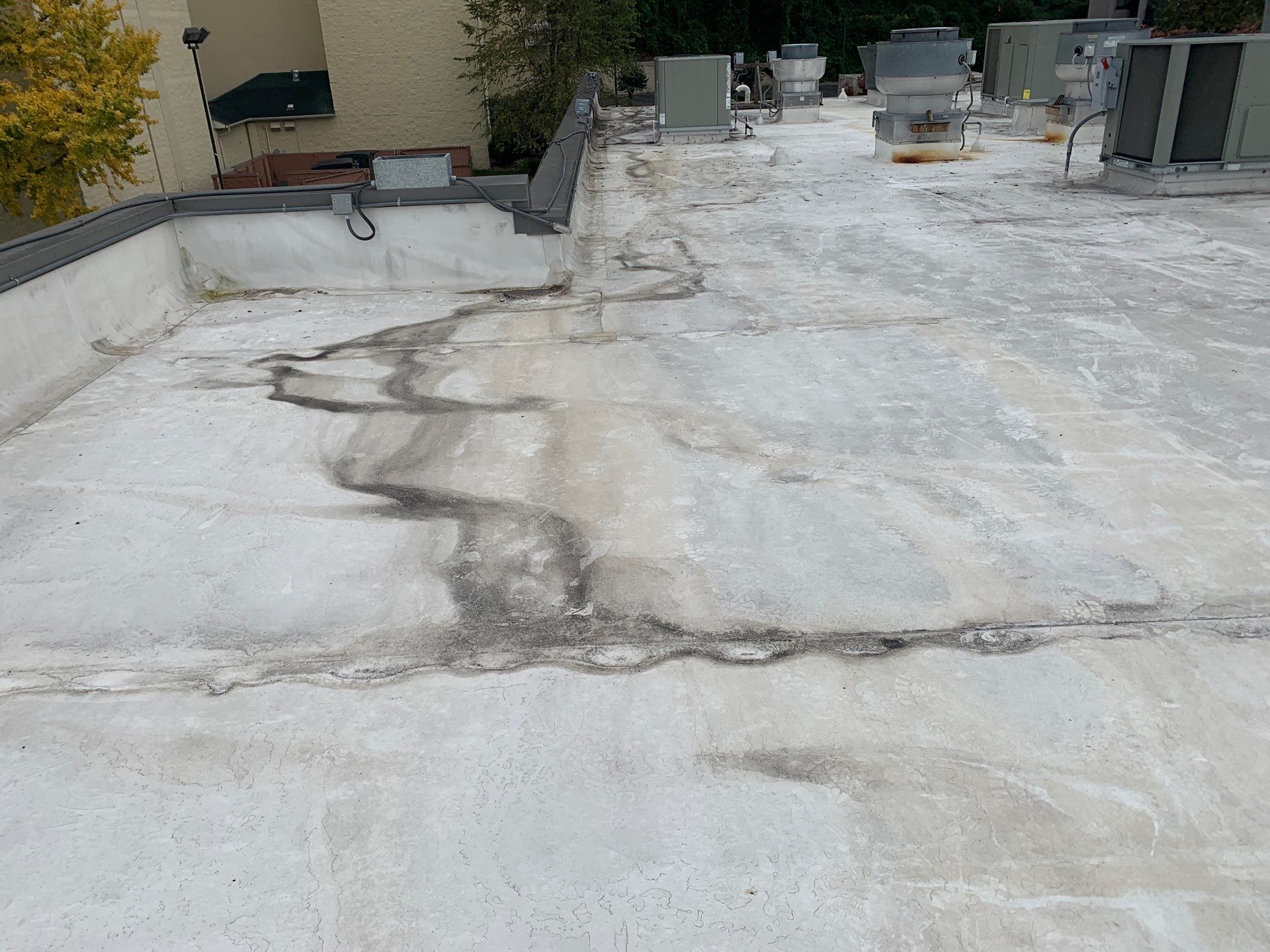
Wind and severe-thunderstorm roof damage, documented for the claim file.
Perimeter and membrane inspection, wind-uplift documentation, and repair scoping for Washington DC commercial roofs after severe weather.
The Wind Events That Damage DC Commercial Roofs
Washington sits in a mid-Atlantic weather pattern that produces severe thunderstorms through spring and summer, occasional derecho-type wind events that move fast and hit hard across a wide swath of the region, and remnant tropical systems that arrive later in the season carrying sustained wind and heavy rain well after landfall further south. None of these are exotic events here: they're a normal part of a DC roof's working life, and they're also the most common cause of the wind and storm claims we document.
Wind damage on a low-slope commercial roof rarely announces itself the way a residential shingle blow-off does. A membrane can lift at a seam or a perimeter edge, get pushed back down by the next gust, and leave a claim-worthy defect that's invisible from the ground and easy to miss on a quick walkthrough. Coping caps loosen. Rooftop units shift on their curbs. Flashing at parapet walls works loose just enough to let wind-driven rain behind it during the next storm. We look for exactly these patterns because they're where wind damage actually lives on a flat commercial roof.
Where We Look First
Roof perimeters and terminations take the highest wind load on any low-slope roof, so that's where we start: membrane attachment at the edge metal, coping seams, parapet flashing, and any transition where the field membrane meets a wall or curb. From there we move to rooftop equipment: units that have shifted, curbs with separated flashing, and conduit or piping that's pulled loose from its supports. Interior ceiling stains and active leaks get traced back to their roof-level source rather than just noted as generic water damage.
Documenting a Wind Event
We photograph lifted or torn membrane, displaced coping and edge metal, damaged flashing, and any rooftop equipment that shows physical movement or damage. Where uplift has occurred, we measure the affected area and note the direction of displacement, which helps tie the damage to a specific storm's wind direction rather than leaving it as an ambiguous finding. That level of detail is what lets an adjuster connect what's on the roof to what the weather record shows for that date.
Building the Repair Scope After a Wind Event
A wind-damage scope has to separate what failed structurally from what's cosmetic. A creased metal panel might be fine to leave in place; a membrane seam that's opened along a run needs to be repaired or the roof will keep taking on water at that spot in the next storm. We write the scope to match what the roof actually needs: full perimeter re-securement where attachment has failed broadly, targeted flashing repair where the damage is isolated, and full replacement recommendations only where the roof's overall condition supports that call.
We're your roofing contractor, not a public adjuster: we document the wind and storm damage and build an accurate repair scope so you and your adjuster are working from the same facts. We don't negotiate the claim or promise a specific payout; we make sure the roof-side evidence holds up.
Common Questions About Wind & Storm Damage Claims
How do I know if roof damage is from wind or just aging?
Wind damage tends to show as physical displacement, lifted seams, torn membrane, moved equipment, bent or missing edge metal, concentrated at perimeters and terminations where wind load is highest. Age-related wear tends to be more uniform across the field. We document both so the distinction is clear to the adjuster.
Can a roof look fine from the ground after a storm and still have wind damage?
Yes, and it's common on flat commercial roofs. Perimeter and seam damage isn't visible from street level, which is exactly why a rooftop inspection after a significant wind event matters even when nothing looks obviously wrong from below.
Does a derecho or tropical remnant count as storm damage for a claim?
Wind and rain from any severe weather event, including fast-moving straight-line wind systems or the remnants of a tropical system, can produce claim-eligible roof damage. What matters for the claim is documenting the specific damage and connecting it to that event's date and conditions.
What if the wind damage is minor: is it still worth documenting?
Small perimeter or flashing damage from wind can turn into a much larger leak problem before the next storm if it isn't repaired. Documenting and addressing it while it's minor is usually the cheaper path, and it also creates a record if the damage does grow into a larger claim later.
How soon after a storm should the roof get inspected?
As soon as it's safe to access the roof. Wind-damaged flashing and lifted membrane seams let water in during the very next rain, so early inspection both protects the building and captures the damage before weather or repairs by others change the roof's condition.